
User centred design
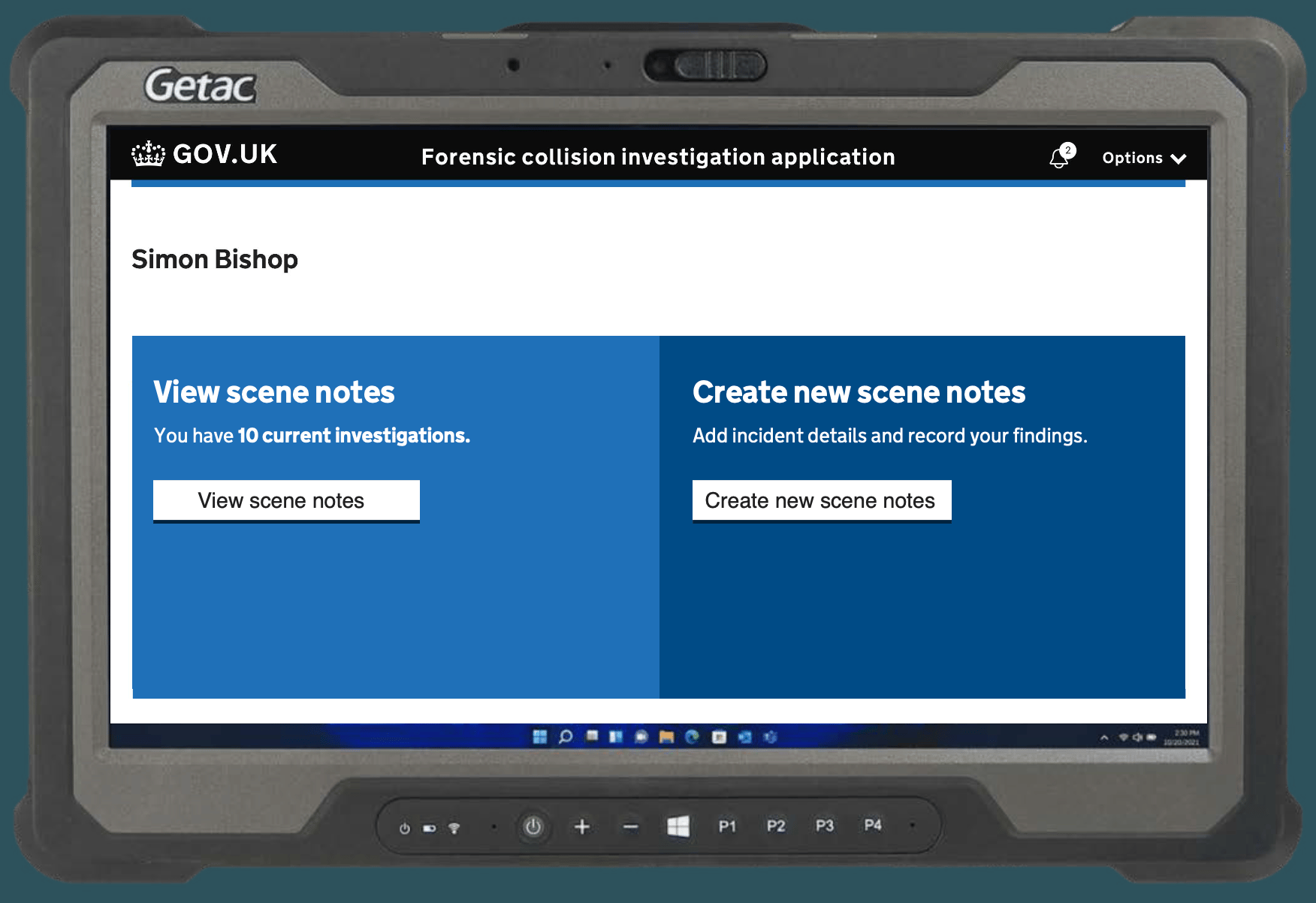
DFT approached Version 1 to transform the way they collected roadside collision information. A new app would be developed which would become an essential part of Forensic Investigators ‘kit’.
I worked on the project from Discovery through to Beta, initially as a Service Designer and then as the Interaction Designer.
Understanding what Forensic Investigators do
We observed how investigators completed their tasks during mock incidents at their training sites. We learnt about the importance of recording time sensitive elements or other evidence that could be degraded due to weather conditions etc.
We would develop our understanding of common user flows as well as the nuances of specialist investigators.
Design and prioritisation workshops
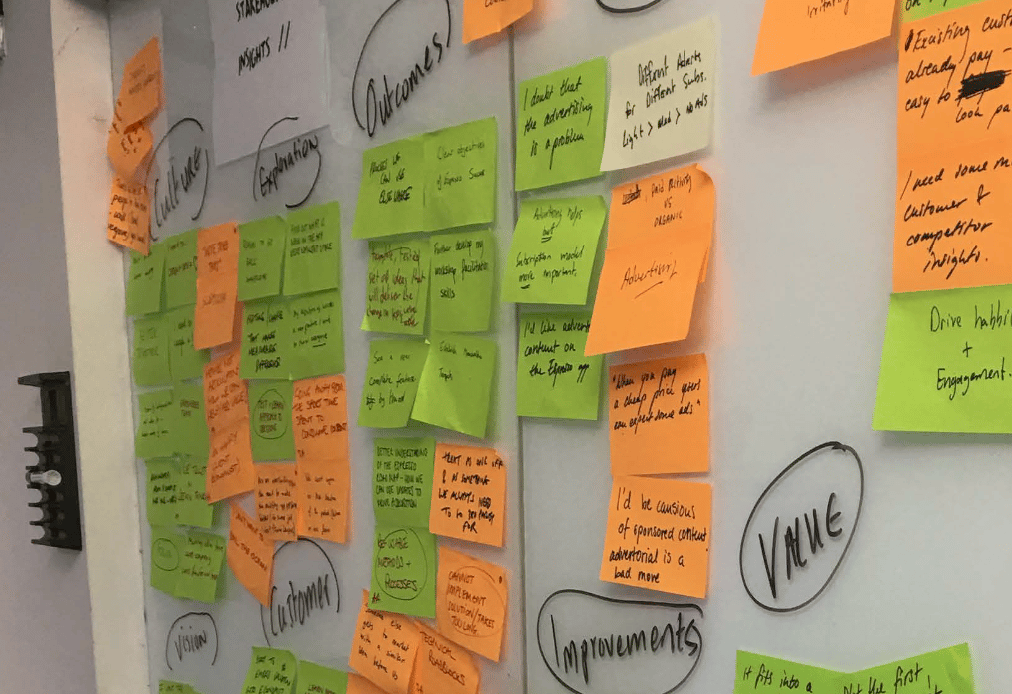
During design workshops we explored how features could be developed with a diverse group of forensic investigators. We would build a consensus on which features would address as many user needs for the broadest audience.
Identifying opportunity areas
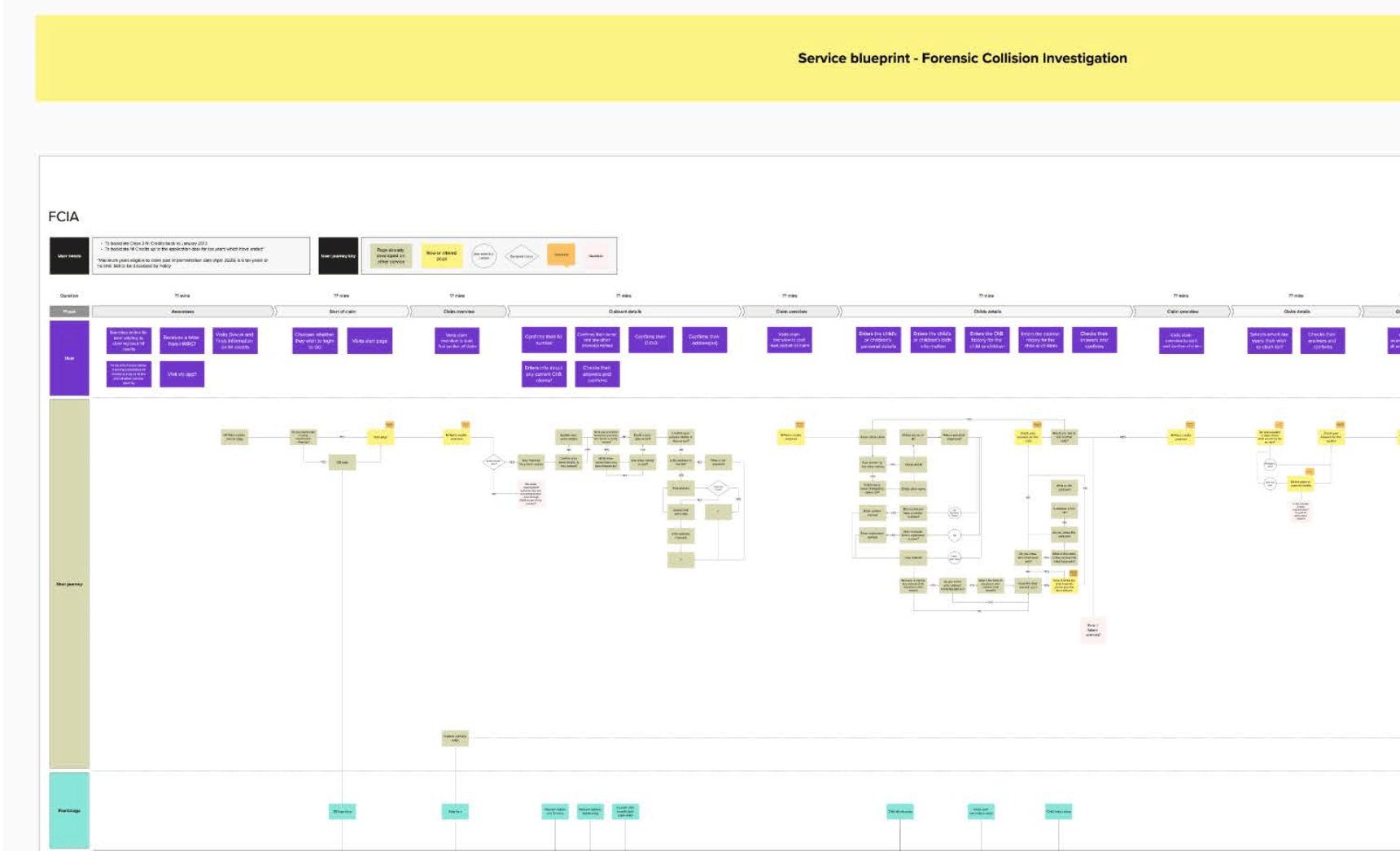
Once we had a clear set of user needs and agreed the prioritisation of features, we would plot common user journeys, edge cases, pain points and opportunity areas.
We aligned user needs and digital opportunites including:
• Streamlining of data collection• Transcribing spoken audio notes for summary info
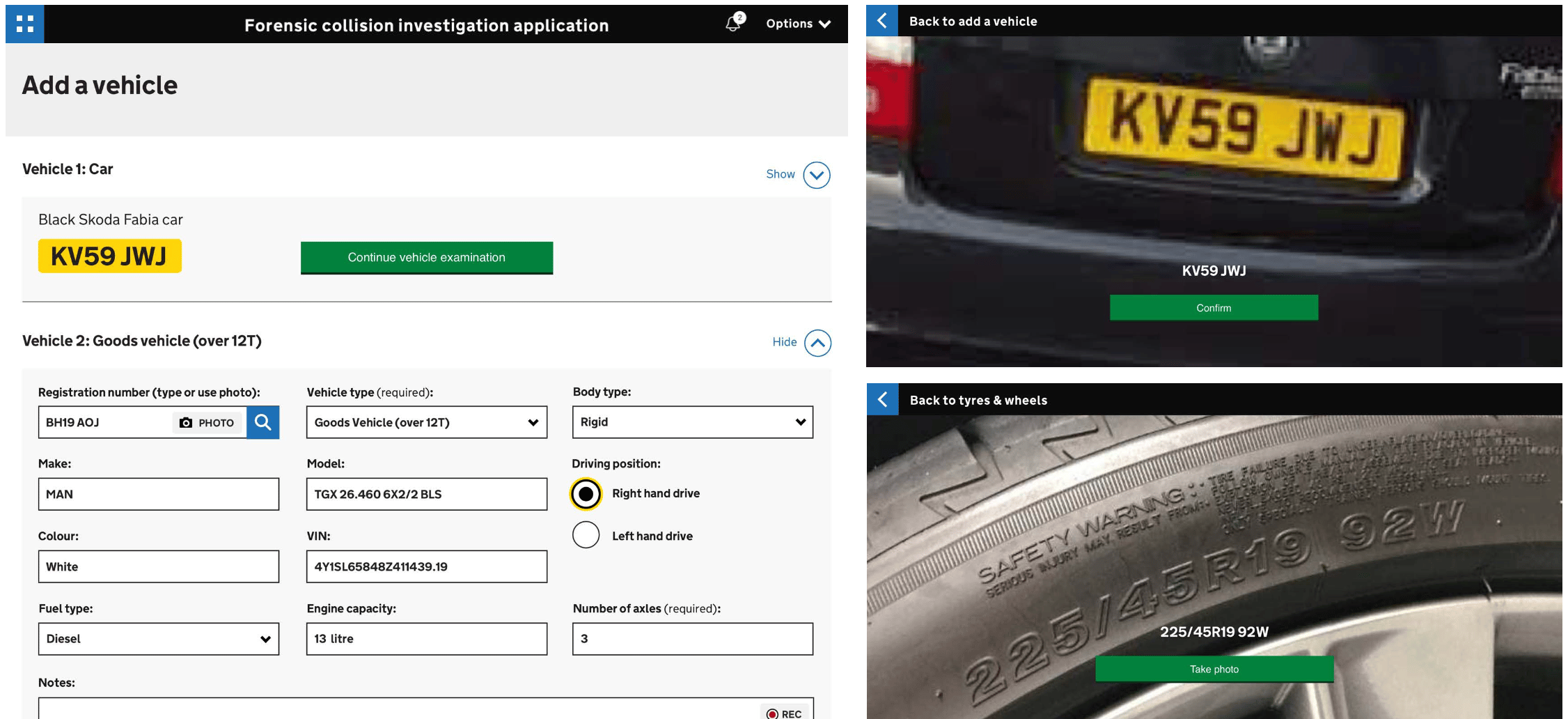
• Pre-populating information from public databases
• Using camera and video features• Use of gestures and stylus to annotate and draw

Problems and challenges
I collaborated closely with UCD colleagues in an iterative cycle to solve complex problems. I developed features that aligned to stakeholder and business requirements, through the lens of the user.
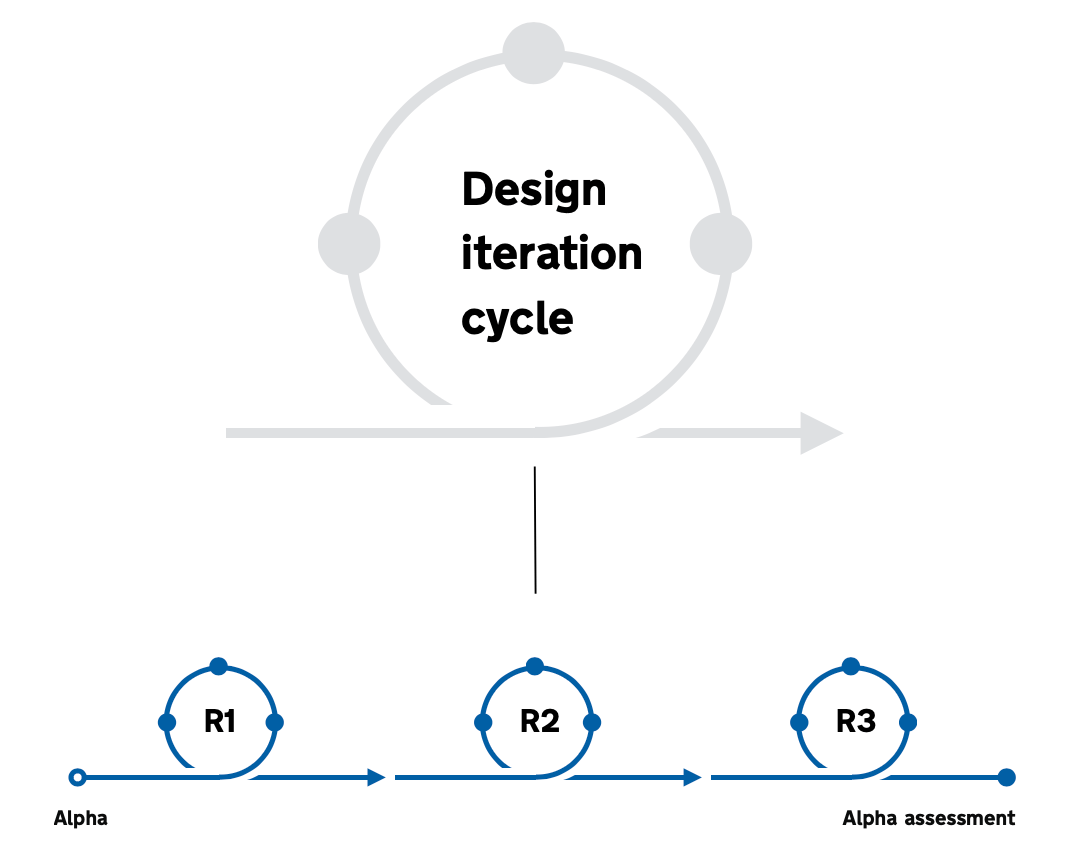
Typical iteration cycles involved:
• Exploring initial ideas with whole team• Involving stakeholders in the design process• Iterating design components and artefacts• Building new features into a clickable prototype• Observing and analysing user feedback• Conducting external design crits and assessments
Responsive web app
Iterating robust patterns that solved user needs
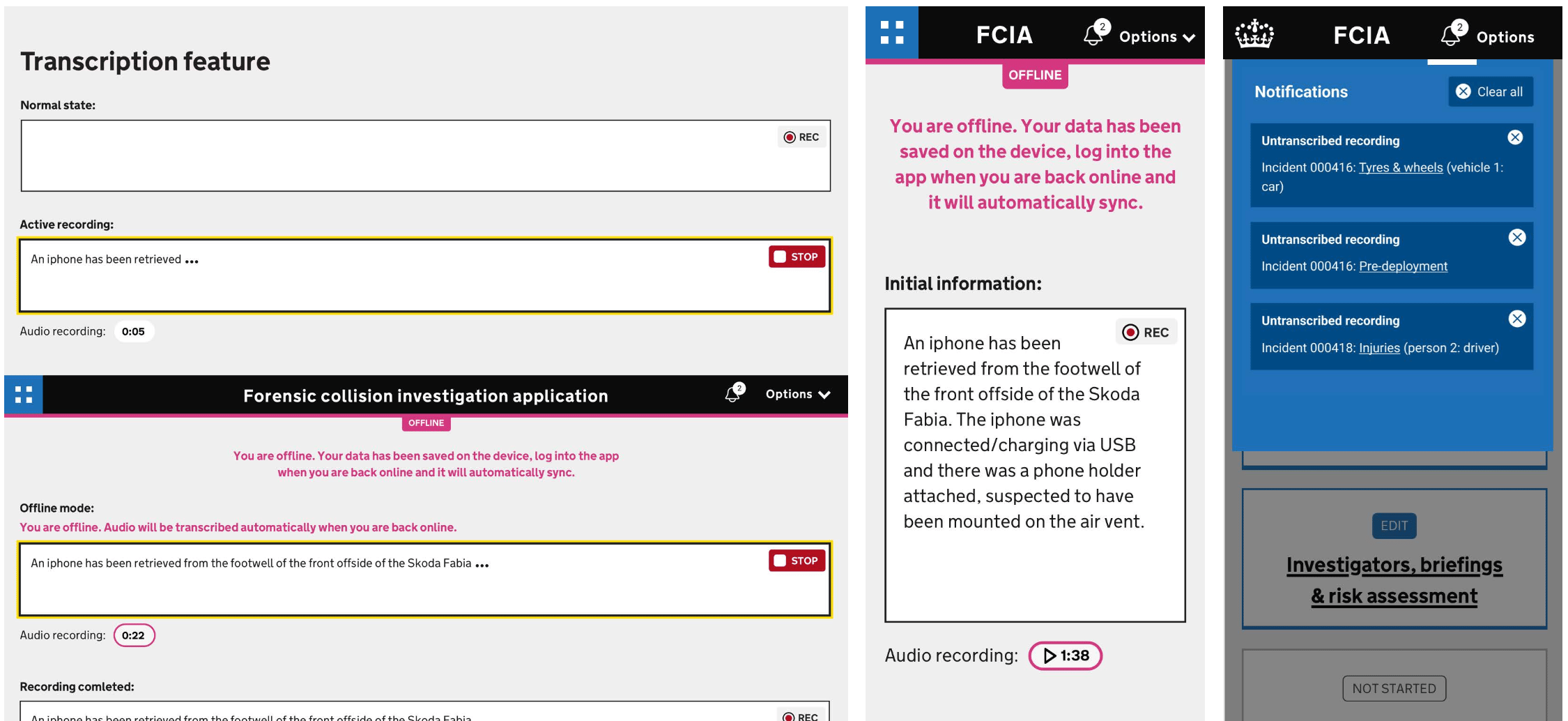
Forensic Investigators had unique user needs to record audio notes, which could be transcribed by the app.
Design approach:
• Taking existing principles of the input box• Adding audio recording in an intuitive way• Testing the micro interactions with users• Considering scenarios when the connection drops
• Exploring technical error considerations
• Preparing a detailed spec for developers
Transcription feature
Connecting to public databases
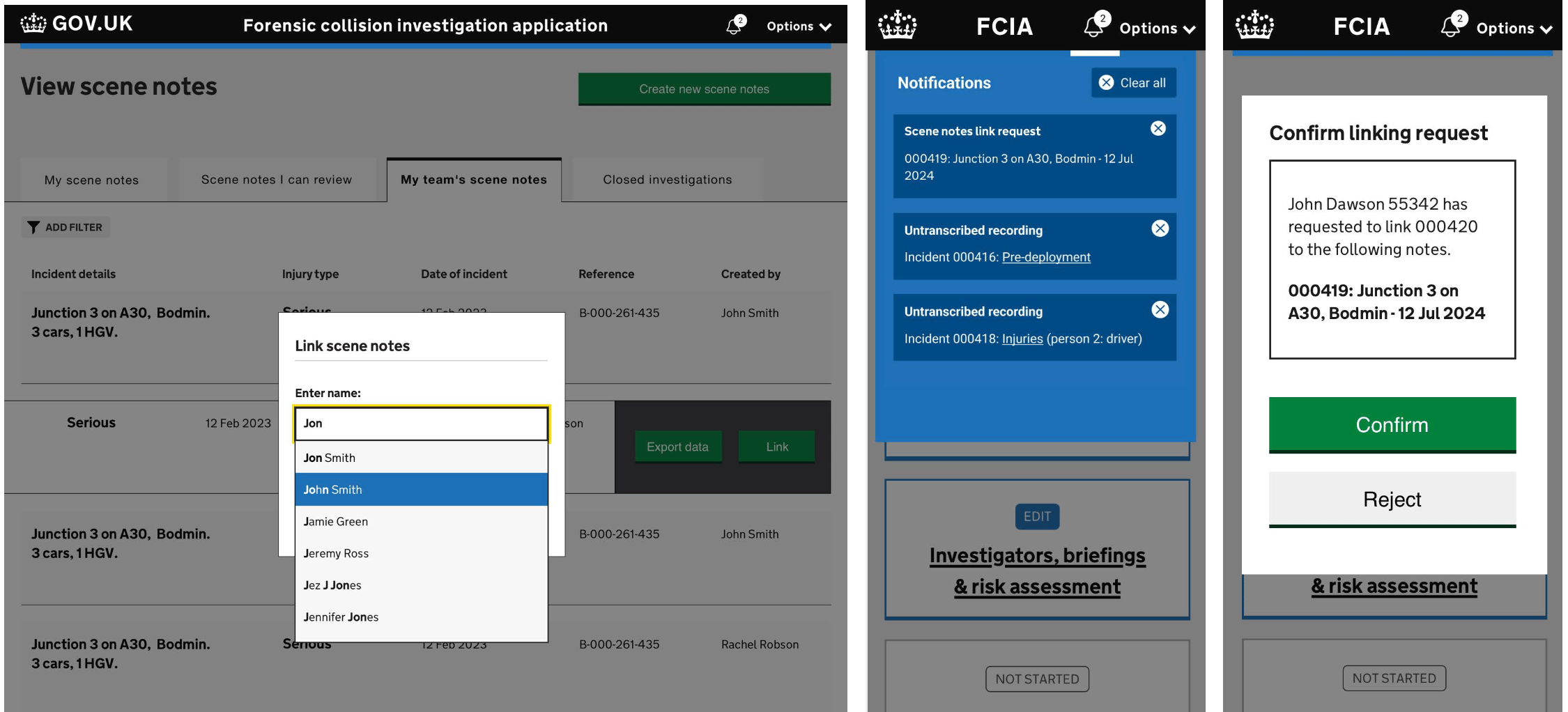
Linking investigations
The end result
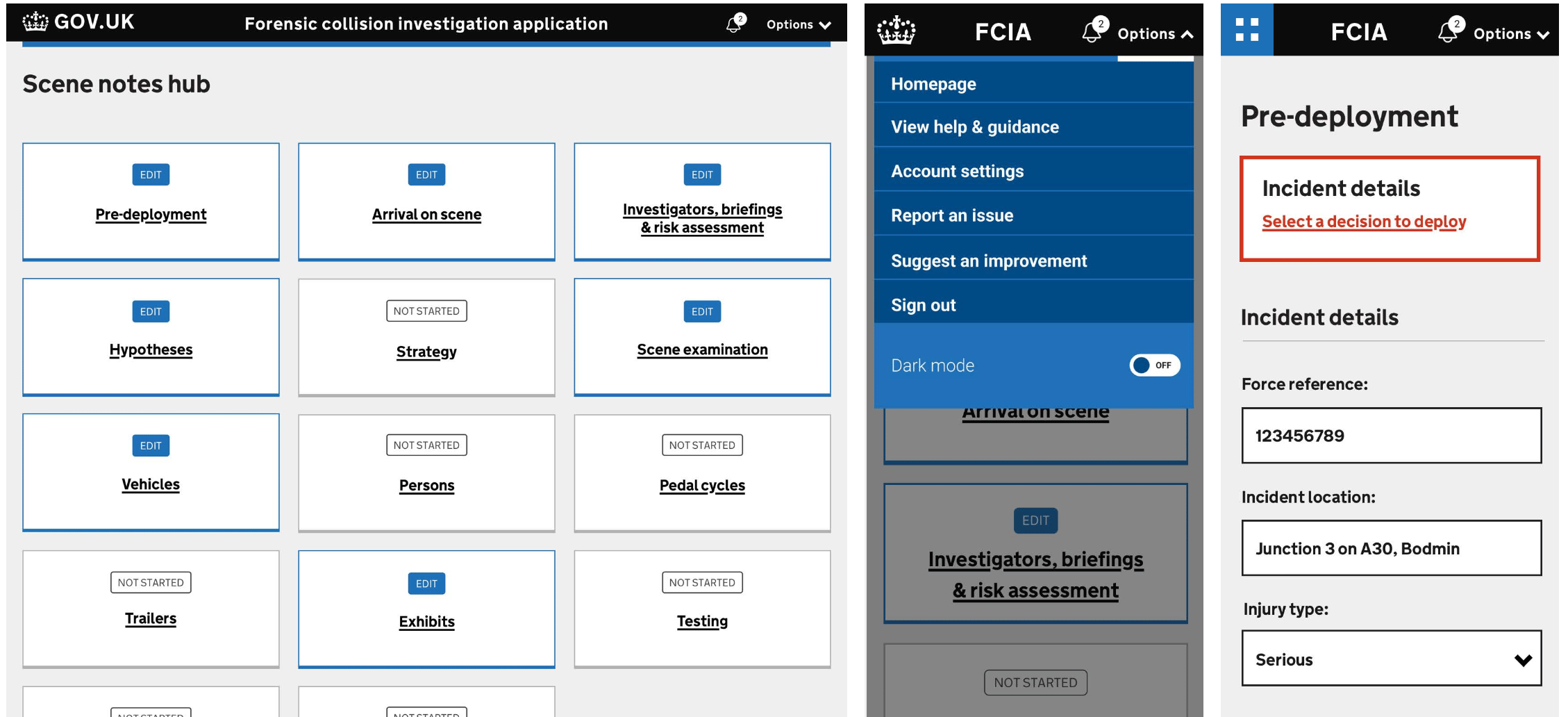
I developed a robust design system that was recognisable, intuitive and focussed on the user needs of Forensic Investigators. Through the use of thorough user testing, we validated prototypes with investigators all over the UK.
As the service went from discovery phase into alpha, we iterated colour contrast to address accessibility reports on ‘Dark Mode’ as well as other minor font size issues. We kept an active link where users could feedback any usability or technical issues to be addressed in future releases.
User centred design
DFT approached Version 1 to transform the way they collected roadside collision information. A new app would be developed which would become an essential part of Forensic Investigators ‘kit’.
I worked on the project from Discovery through to Beta, initially as a Service Designer and then as the Interaction Designer.
Understanding what Forensic Investigators do
We observed how investigators completed their tasks during mock incidents at their training sites. We learnt about the importance of recording time sensitive elements or other evidence that could be degraded due to weather conditions etc.
We would develop our understanding of common user flows as well as the nuances of specialist investigators.
Design and prioritisation workshops
During design workshops we explored how features could be developed with a diverse group of forensic investigators. We would build a consensus on which features would address as many user needs for the broadest audience.
Identifying opportunity areas
Once we had a clear set of user needs and agreed the prioritisation of features, we would plot common user journeys, edge cases, pain points and opportunity areas.
We aligned user needs and digital opportunites including:
• Streamlining of data collection• Transcribing spoken audio notes for summary info
• Pre-populating information from public databases
• Using camera and video features• Use of gestures and stylus to annotate and draw
Problems and challenges
I collaborated closely with UCD colleagues in an iterative cycle to solve complex problems. I developed features that aligned to stakeholder and business requirements, through the lens of the user.
Typical iteration cycles involved:
• Exploring initial ideas with whole team• Involving stakeholders in the design process• Iterating design components and artefacts• Building new features into a clickable prototype• Observing and analysing user feedback• Conducting external design crits and assessments
Responsive web app
Iterating robust patterns that solved user needs
Forensic Investigators had unique user needs to record audio notes, which could be transcribed by the app.
Design approach:
• Taking existing principles of the input box• Adding audio recording in an intuitive way• Testing the micro interactions with users• Considering scenarios when the connection drops
• Exploring technical error considerations
• Preparing a detailed spec for developers
Transcription feature
Linking investigations
The end result
I developed a robust design system that was recognisable, intuitive and focussed on the user needs of Forensic Investigators. Through the use of thorough user testing, we validated prototypes with investigators all over the UK.
As the service went from discovery phase into alpha, we iterated colour contrast to address accessibility reports on ‘Dark Mode’ as well as other minor font size issues. We kept an active link where users could feedback any usability or technical issues to be addressed in future releases.
User centred design
DFT approached Version 1 to transform the way they collected roadside collision information. A new app would be developed which would become an essential part of Forensic Investigators ‘kit’.
I worked on the project from Discovery through to Beta, initially as a Service Designer and then as the Interaction Designer.
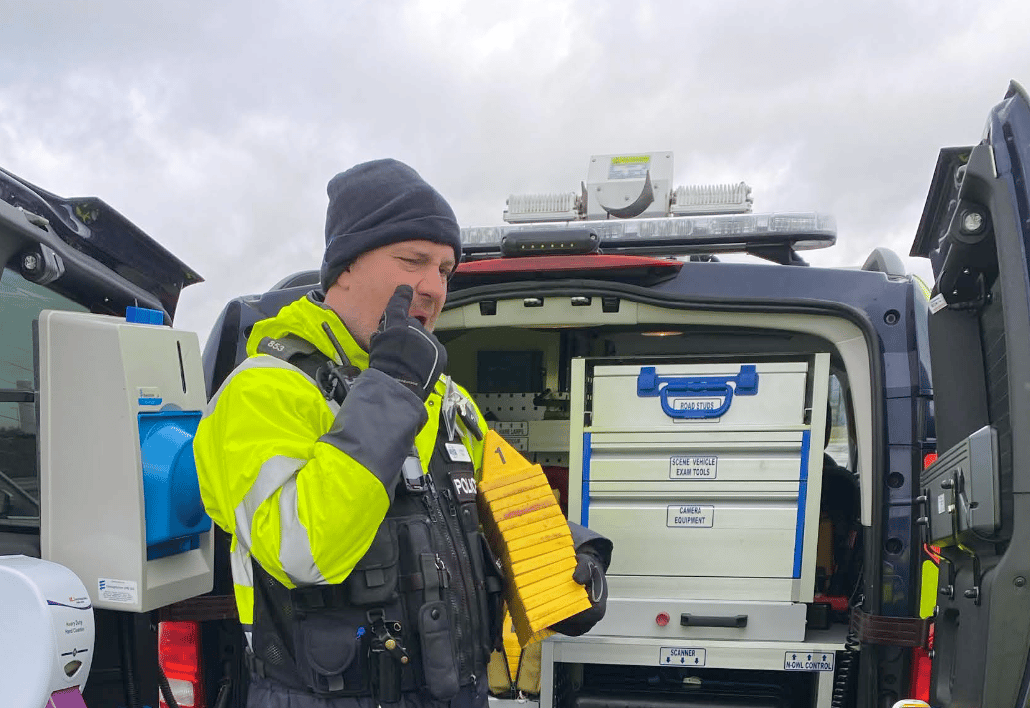
Understanding what Forensic Investigators do
We observed how investigators completed their tasks during mock incidents at their training sites. We learnt about the importance of recording time sensitive elements or other evidence that could be degraded due to weather conditions etc.
We would develop our understanding of common user flows as well as the nuances of specialist investigators.
Design and prioritisation workshops
During design workshops we explored how features could be developed with a diverse group of forensic investigators. We would build a consensus on which features would address as many user needs for the broadest audience.
Identifying opportunity areas
Once we had a clear set of user needs and agreed the prioritisation of features, we would plot common user journeys, edge cases, pain points and opportunity areas.
We aligned user needs and digital opportunites including:
• Streamlining of data collection• Transcribing spoken audio notes for summary info
• Pre-populating information from public databases
• Using camera and video features• Use of gestures and stylus to annotate and draw
Problems and challenges
I collaborated closely with UCD colleagues in an iterative cycle to solve complex problems. I developed features that aligned to stakeholder and business requirements, through the lens of the user.
Typical iteration cycles involved:
• Exploring initial ideas with whole team• Involving stakeholders in the design process• Iterating design components and artefacts• Building new features into a clickable prototype• Observing and analysing user feedback• Conducting external design crits and assessments
Responsive web app
Iterating robust patterns that solved user needs
Forensic Investigators had unique user needs to record audio notes, which could be transcribed by the app.
Design approach:
• Taking existing principles of the input box• Adding audio recording in an intuitive way• Testing the micro interactions with users• Considering scenarios when the connection drops
• Exploring technical error considerations
• Preparing a detailed spec for developers
Transcription feature
Connecting to public databases
Linking investigations
The end result
I developed a robust design system that was recognisable, intuitive and focussed on the user needs of Forensic Investigators. Through the use of thorough user testing, we validated prototypes with investigators all over the UK.
As the service went from discovery phase into alpha, we iterated colour contrast to address accessibility reports on ‘Dark Mode’ as well as other minor font size issues. We kept an active link where users could feedback any usability or technical issues to be addressed in future releases.